二十字节摘要
!Twenty byte digest.
2026
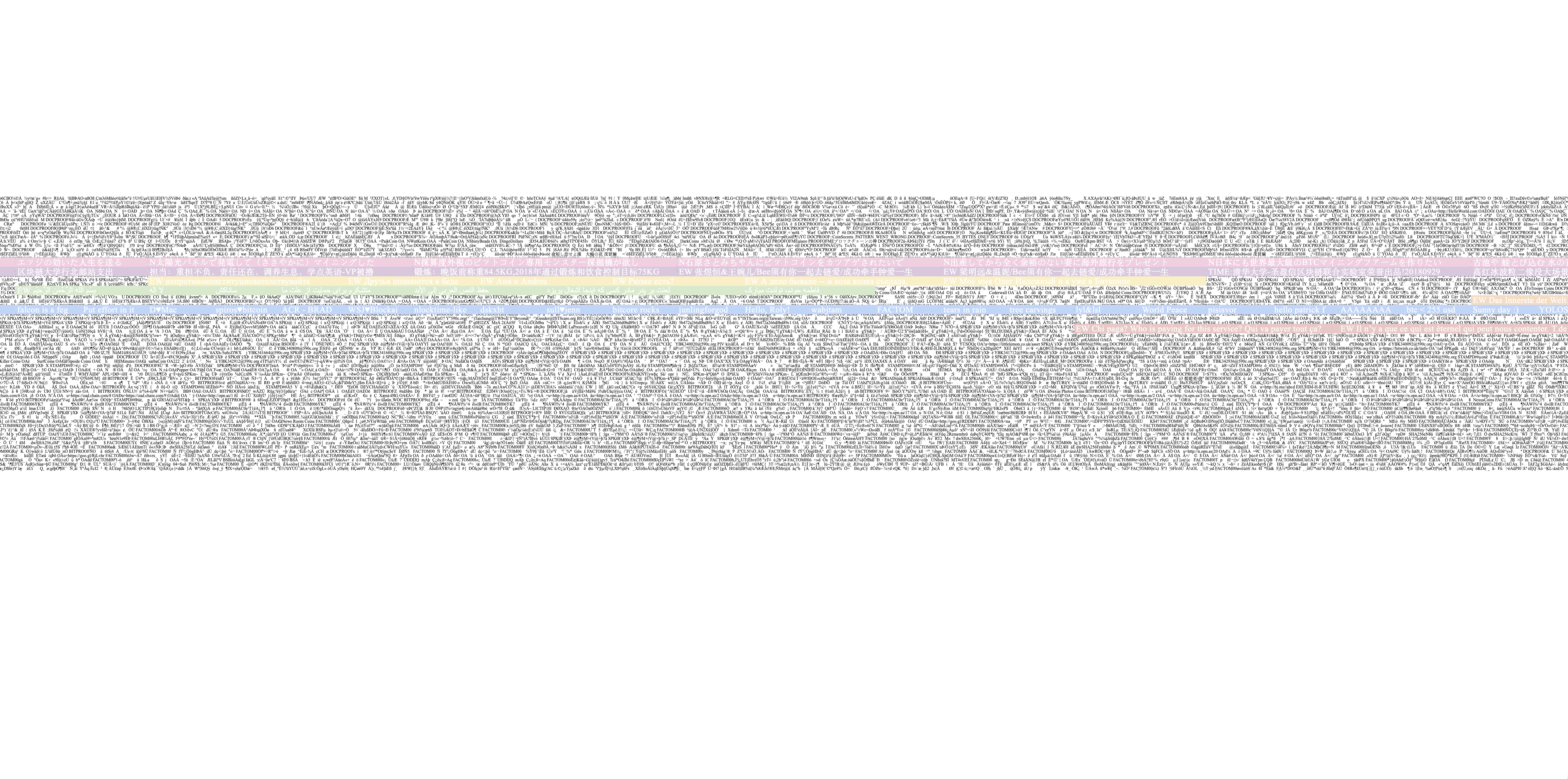
以比特币链上第一条人类可读的留言命名,把 13 亿条转账中的乱码与十一种人类语言按真实比例铺在画布上。人们在有限的时间里,能获取的信息终究只是沧海一粟。
基本信息
- 艺术家:CryptoZR
- 创作年份:2026
- 创作平台:比特币公链
- 创作材料:比特币链上数据
- 数据范围:比特币全链 OP_RETURN 解析,区块 228,596 至 915,384
- 版本数:1/1
- 资产属性:N/A
- 作品类型:比特币生态与共识
作品介绍
2013年3月29日,比特币第 228,596 个区块里出现了一笔不寻常的交易。有人在本应只承载转账的输出脚本里,用 OP_RETURN 写下了 20 个字节:「!Twenty byte digest.」。这是比特币链上第一条能被人类直接读出的 OP_RETURN 留言。它没有收款人,没有金额,只是一句关于自身长度的自述:二十字节摘要。在密码学领域,20字节摘要是一个极其核心的底层规格,广泛应用于加密钱包地址生成、数据完整性校验、Git 版本控制、零知识证明与默克尔树等场景。作品以它命名,也从它开始滚动。
截至采样时,比特币全链累计超过 13 亿条转账记录。其中带有 OP_RETURN 留言的只有 58,504,519 条,约占 4.5%;而这 5850 万条里,能被解码为人类语言的 Text Message 只有 3,585,224 条,约占其中的 6.1%。
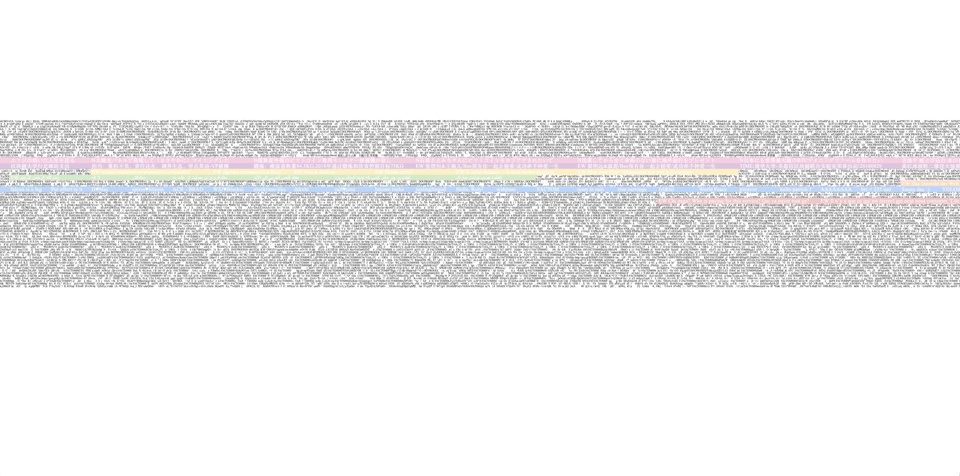
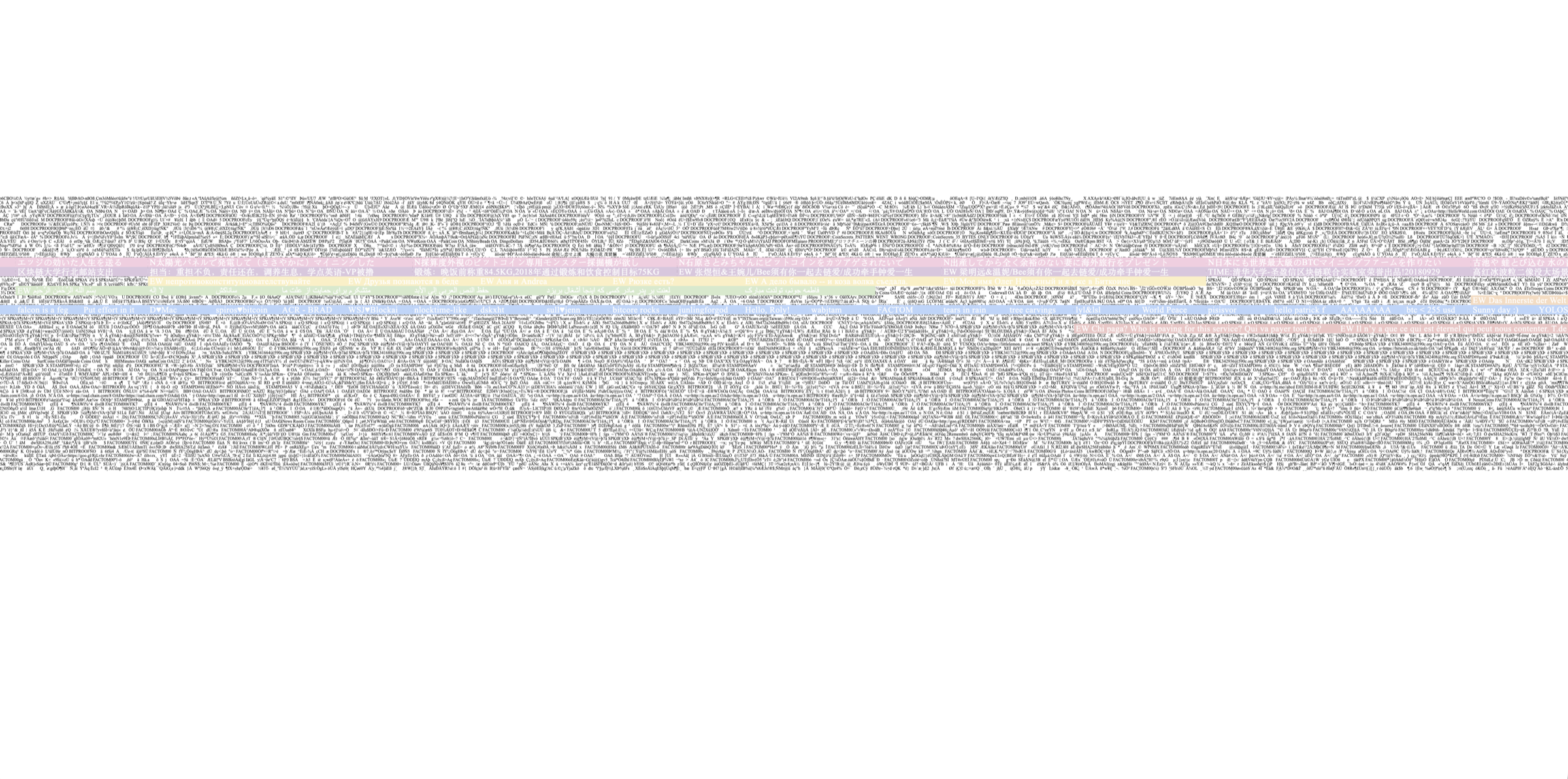
作品把这些比例搬到画面上。整张白色画布对应 13 亿条转账。在画布的黄金分割位,用不属于 Text Message 的乱码信息以黑色反复覆盖,形成一片密不透风的幕墙,高度是画布的 4.5%。幕墙之上,每种语言分得一条轨道,用白色写入文字:英文、日文、中文、俄文、阿拉伯文、德文、西班牙文、法文、意大利文、韩文、葡萄牙文,各条轨道代表了人类可读文本。十一条轨道同时也是十一件乐器,一首依《十二平均律》顺序走遍 24 个调的乐曲决定了文本在轨道上的排布。远看是一幅两色的色域绘画,走近才发现每一笔都是曾经真实发生过的转账。
创作背景
作品的全部文字都取自对比特币全链 OP_RETURN 数据的解析。在 58,504,519 条 OP_RETURN 中,19,787,451 条以「omni」开头,占三分之一,是 Omni 协议的数据,绝大多数是 USDT 的转账记录;30,916,529 条连协议名都无法识别,超过一半;能被解码为人类语言的 Text Message 只有 3,585,224 条。
可解读的文本被归入十一种语言,它们在各自的轨道上自右向左滑过。下面是链上真实刻录过的句子和它们所在的区块:
英文:「JFK was eaten by bears.」(268,060)、「Satoshi lives」(299,783)。
日文:「祇園精舎の鐘の声」(306,810),《平家物语》的开篇,说的是诸行无常,却被写进一条永不更改的账本。
中文:「hello 比特币」(306,626)、「比特币、黄金、法币三分天下」(328,776)、「亚洲加密货币协会记账实验1」(331,793)。
俄文:「Кристина♥Костя」(352,492)、「Друзья познаются в беде」,患难见真情(366,474)。
阿拉伯字母:「يسقط حكم العسكر」,军政府下台(427,582);「زن زندگی آزادی woman life freedom」(758,876,2022年10月16日)。后一句其实是波斯语,分类器只认得字母,认不出语言。
德文:「So verschiede mir zwei au si, ich wird dich immer i mim Herz trage, Dalia.」(398,395),这是瑞士德语,连德国人也未必能一眼读懂。
西班牙文:「To my dear friend Mariano, por muchos años」(378,735)。
法文:「Bitcoin, ça marche... Qu'on se le dise!」(364,007)。
意大利文:「Non si può fermare il vento...」(366,162)。
韩文:「해뜨기 전 새벽이 가장 춥다.」,日出前的黎明最冷(364,539)。
葡萄牙文:「Palmeiras não tem mundial!」(697,913),一句球迷之间的嘲讽。
创作理念
一、语言是一种加密,也是一种协议。站在墙前的每一个人,只能读懂其中一两条轨道。其余的轨道对他而言仍然是乱码:字母可辨,意义封闭。即使是「人类可读」的信息,人也只能读懂一部分。解码一种语言的前提是持有这套协议,而这把密钥不由算法分发,由出生地分发。十一条轨道并排放在同一面墙上,每个观众看到的可读比例都不一样,没有人能读完整面墙。
二、乱码是相对的。黑色幕墙里的乱码并不是噪音。Omni 协议的一千九百多万条数据在墙上显示为一串无法辨认的字符,但只要掌握了协议的运行方式,每一条都能被精确地还原为一笔 USDT 的转账。同样的还有 DOCPROOF(文件存在性证明)、CNTRPRTY(Counterparty)、FACTOM、SPK(时间戳服务)等公开协议,它们对圈内人是凭证,对圈外人是乱码。更大的一块是三千多万条从未公开过协议的数据,只在了解其功能的群体内部流通,外部人员既不知道它们是什么,也拿不到解码它们的方法。对持有协议的人,那面墙上写满了账目、合约和凭证。
三、白色才是终极的加密。13 亿条转账中,95.5% 除了地址与数量之外没有留下任何信息。转账的真实原因只存在于链下:交易所的充值与提现、私下的场外交易、朋友之间的借还。这些恰恰是最有价值的信息,也正因为有价值,才不能上链。能在链上被解读出来的,反而是普通而大众的内容:一句问候,一句情话,一条球迷的嘲讽,一个「Satoshi lives」。可读性与价值成反比。
四、回到真实世界。链上信息的分层,和真实世界中信息的分层是同一个结构。最有价值的信息只在私下见面时互通,什么都不留下,对应作品的空白。其次是通过具有隐私功能的网络进行的交流,看得见有东西在传,看不见传的是什么,对应黑色乱码。最后才是公开网络上的信息,时效性不如前两者,还要再经过传播路径与语言的两重过滤,才落到某一个人面前,对应墙上那十一条彩色轨道。人们最终接收到的,是 13 亿条里那 4.5%,再是 4.5% 里那 6.1%,再是 6.1% 里自己恰好懂的那一条轨道。人们在有限的时间里,能获取的信息终究只是数据海洋的一个「二十字节摘要」
创作形式
作品是一个本地运行的网页。画布 30000 × 10000 像素,全部文字使用 Times New Roman。画布的 38.2% 处是高 448 像素的黑色乱码幕墙,由 40,000 条不可读的 OP_RETURN 数据以 7 像素字号密排而成。幕墙内叠放十一条高 15.5 像素的语言轨道,每条轨道对应一种语言和一种颜色,英文轨位于幕墙自身的黄金分割位。
可读文本按区块高度从早到晚排列,从「!Twenty byte digest.」开始,以每秒约 93 像素的速度自右向左持续滚动;轨道没有文本经过时完全透明,露出黑色幕墙。
十一条轨道同时是十一件乐器:英文为羽管键琴主奏,日文与中文为长笛和大提琴的中低声部,其余八种语言作定旋律声部进出。一首依巴赫《十二平均律》顺序走遍 24 个大小调的乐曲决定了每条文本的位置与长度,文本的字符宽度决定它落在哪个音符上。按下 M 键即可听到,整曲约 86 分钟循环播放。
作品评论
参展信息
媒体报道
合约源代码(如有)
作品视频
Basic Information
- Artist: CryptoZR
- Year: 2026
- Platform: Bitcoin Blockchain
- Materials: Bitcoin OP_RETURN Data
- Data Range: OP_RETURN outputs parsed from the whole Bitcoin chain, blocks 228,596 to 915,384
- Edition: TBD
- Asset Type: N/A
- Category: Bitcoin Ecosystem & Consensus
Introduction
In the spring of 2013 an unusual transaction appeared in Bitcoin block 228,596. In an output script meant only to carry a payment, someone used OP_RETURN to write twenty bytes: "!Twenty byte digest." It is the first OP_RETURN message on the Bitcoin chain that a human can read directly. It has no recipient and no amount; it is a sentence about its own length, a digest of twenty bytes. The work takes its name from it, and starts scrolling from it.
At the time of sampling, the Bitcoin chain held more than 1.3 billion transfer records. Only 58,504,519 of them carry an OP_RETURN message, about 4.5%; and of those 58.5 million, only 3,585,224 can be decoded as human language, about 6.1%.
The work moves these proportions onto the picture plane. The whole white canvas stands for the 1.3 billion transfers. At the golden section of the canvas, the messages that are not Text Messages are printed over one another in black, forming an impenetrable curtain wall whose height is 4.5% of the canvas. On top of the wall, one track per language is written in white: English, Japanese, Chinese, Russian, Arabic, German, Spanish, French, Italian, Korean and Portuguese; the tracks stand for the human-readable text. The eleven tracks are also eleven instruments; a piece that passes through all 24 keys in the order of Bach's Well-Tempered Clavier decides where each text lands. From a distance it is a two-colour field painting; up close, every stroke is a transfer that really happened.
Background
Every word in the work comes from parsing the OP_RETURN data of the entire Bitcoin chain. Of the 58,504,519 OP_RETURN outputs, 19,787,451 begin with "omni", a third of the total: data of the Omni protocol, most of it USDT transfers. 30,916,529, more than half, cannot even be assigned to a named protocol. Only 3,585,224 can be decoded as human language.
The readable texts are sorted into eleven languages and slide from right to left on their own tracks. These are sentences actually inscribed on the chain, with the blocks that hold them:
English: "JFK was eaten by bears." (268,060); "Satoshi lives" (299,783).
Japanese: "祇園精舎の鐘の声" (306,810), the opening line of the Tale of the Heike, on the impermanence of all things, written into a ledger that can never be changed.
Chinese: "hello 比特币" (306,626); "比特币、黄金、法币三分天下", Bitcoin, gold and fiat divide the world in three (328,776); "亚洲加密货币协会记账实验1", Asian Cryptocurrency Association bookkeeping experiment 1 (331,793).
Russian: "Кристина♥Костя" (352,492); "Друзья познаются в беде", a friend in need is a friend indeed (366,474).
Arabic script: "يسقط حكم العسكر", down with military rule (427,582); "زن زندگی آزادی woman life freedom" (758,876, autumn 2022). The latter is in fact Persian; the classifier recognises the alphabet, not the language.
German: "So verschiede mir zwei au si, ich wird dich immer i mim Herz trage, Dalia." (398,395), in Swiss German, which even a German may not read at a glance.
Spanish: "To my dear friend Mariano, por muchos años" (378,735).
French: "Bitcoin, ça marche... Qu'on se le dise!" (364,007).
Italian: "Non si può fermare il vento..." (366,162).
Korean: "해뜨기 전 새벽이 가장 춥다.", the hour before dawn is the coldest (364,539).
Portuguese: "Palmeiras não tem mundial!" (697,913), a taunt between football fans.
Concept
-
Language is a form of encryption, and a protocol. Anyone standing in front of the wall can read only one or two of the tracks. The others remain gibberish: the letters are legible, the meaning is sealed. Even "human-readable" information is only partly readable by any given human. Decoding a language presupposes holding its protocol, and that key is issued not by an algorithm but by one's birthplace. With eleven tracks side by side on one wall, every viewer sees a different readable share, and nobody can read the whole wall.
-
Gibberish is relative. The scramble of the black wall is not noise. The nineteen million records of the Omni protocol appear on the wall as unreadable strings, yet anyone who knows how the protocol works can restore each of them exactly to a USDT transfer. The same holds for public protocols such as DOCPROOF (proof of existence), CNTRPRTY (Counterparty), FACTOM and SPK (a timestamping service): credentials to insiders, gibberish to everyone else. The larger part, more than thirty million records, belongs to protocols that were never published, circulating only inside the groups that know their function; outsiders neither know what they are nor can obtain the means to decode them. To those who hold the protocol, the wall is covered in accounts, contracts and receipts.
-
White is the ultimate encryption. Of the 1.3 billion transfers, 95.5% leave nothing behind but addresses and amounts. The real reason for a transfer exists only off-chain: deposits and withdrawals at exchanges, private over-the-counter deals, loans between friends. This is precisely the most valuable information, and precisely because it is valuable it cannot go on-chain. What can be read on-chain is, on the contrary, ordinary and public: a greeting, a love note, a football taunt, a "Satoshi lives". Readability and value are inversely related.
-
Back in the real world. The layering of information on the chain has the same structure as the layering of information in the world. The most valuable information passes only in face-to-face meetings and leaves nothing behind: the blank of the work. Next comes exchange over privacy-preserving networks, where one can see that something is being transmitted but not what: the black scramble. Last comes information on the open internet, less timely than the other two and filtered twice more, by the path of transmission and by language, before it reaches any one person: the eleven coloured tracks on the wall. What a person finally receives is the 4.5% of 1.3 billion, then the 6.1% of that 4.5%, then the single track within that 6.1% that they happen to understand. A drop in the ocean.
Form
The work is a web page that runs locally. The canvas is 30,000 by 10,000 pixels and all text is set in Times New Roman. At 38.2% of the canvas height stands a 448-pixel-high black curtain wall, densely set from 40,000 unreadable OP_RETURN records at a 7-pixel type size. Inside the wall lie eleven stacked language tracks, each 15.5 pixels high, one language and one colour per track, with the English track sitting on the wall's own golden section.
The readable texts are ordered by block height from earliest to latest, beginning with "!Twenty byte digest.", and scroll continuously from right to left at about 93 pixels per second; where a track has no text passing, it is fully transparent and the black wall shows through.
The eleven tracks are also eleven instruments: English is the harpsichord lead, Japanese and Chinese are the flute and cello of the middle and lower voices, and the remaining eight languages enter and leave as cantus-firmus parts. A piece that passes through all 24 major and minor keys in the order of Bach's Well-Tempered Clavier fixes the position and length of every text, and the character width of each text decides which note it falls on. Press M to hear it; the full piece loops every 86 minutes or so.